WHY IT'S LIKE THIS
The biggest danger here runs both ways. Survival International says uncontacted peoples have no immunity to common outside illnesses such as flu and measles, and that these could wipe a small community out. So even a friendly visitor who is slightly unwell could do harm that cannot be undone.
Survival International 2 Apr 2025History gives the islanders a reason to be wary. Across the wider Andaman Islands, the indigenous Andamanese population fell from an estimated 5,000 in 1858 to fewer than 500 in 1931 after the Port Blair penal colony was set up. The historian Adam Goodheart describes the Sentinelese as not so much undiscovered as in hiding, because of what happened to their neighbours after contact.
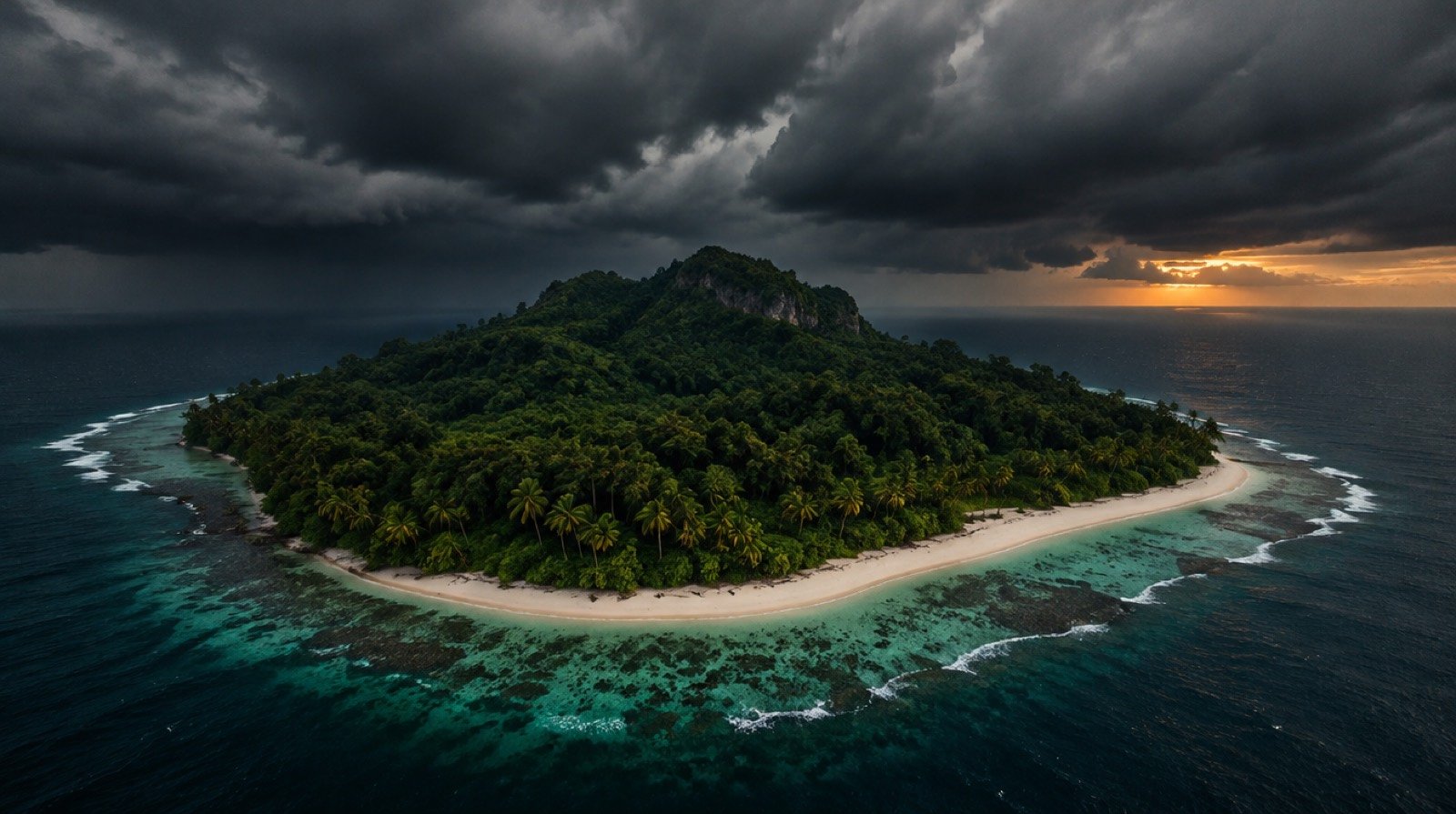
Smithsonian Magazine (Tim Sohn) 7 Dec 2018The place is also hard to reach and hard to understand. The island lies about 30 miles west of the Great Andaman, thickly forested and ringed by forbidding reefs, and in 2025 one visitor needed a crossing of roughly 22 miles of open sea. Nobody has counted the people, and no outsider knows what language they speak or what they call themselves, so there is no way to talk and agree anything.
Smithsonian Magazine (Tim Sohn) 7 Dec 2018Contact attempts by officials did not lead to a lasting understanding. Survival says gift drops in the 1980s and a first weaponless approach in 1991 were followed by the end of the visits in the mid 1990s, and that nobody knows whether the visits harmed anyone through illness. T.N. Pandit, who led the visits, is quoted as saying the team did not want to disturb the islanders' lives without any purpose.
Survival International undated pageIndia's own rule is to watch from a distance. The Home Ministry told parliament in 2019 that the whole island plus coastal sea is a notified tribal reserve, and that it follows an eyes-on and hands-off approach with Coast Guard and Marine Police patrols. This protects the islanders, and it also means people who try to land are likely to be arrested.
Press Information Bureau, Ministry of Home Affairs 5 Feb 2019The danger keeps coming back because some outsiders keep trying to reach the island. Survival names missionaries, social media influencers and illegal fishers as the people seeking contact. The 2025 visitor had already tried in October 2024 and January 2025 before he succeeded in landing for about five minutes.
CBS News (AFP) 4 Apr 2025
WHO IS INVOLVED
The Sentinelese The islanders
A small community living on North Sentinel Island, estimated by Survival at about 50 to 150 people in three groups. They fish and hunt, and Survival says they have not wanted contact with outsiders. T.N. Pandit is quoted as saying they warn people off but do not kill people.
Survival International undated pageGovernment of India, Ministry of Home Affairs State government
Declares the island and its coastal sea a tribal reserve and sets the policy that people on the island are not to be contacted. The ministry itself calls the approach eyes-on and hands-off.
Press Information Bureau, Ministry of Home Affairs 5 Feb 2019Indian Coast Guard and Andaman and Nicobar Marine Police State forces
Make sorties around the island by ship, aircraft and boat to keep outsiders away, according to the Home Ministry. Local police arrested the 2025 visitor, and the police chief said after the 2018 death that the authorities did not want to harm the islanders.
CBS News (AP) 27 Nov 2018Andaman and Nicobar Administration and the Port Blair courts Local authorities and courts
Handle prosecutions of people who enter the reserve. In April 2025 the Port Blair sessions court rejected bail for the US visitor charged under the Foreigners Act, 1946 and the 2012 Amendment Regulation, according to PTI.
The Week (PTI) 15 Apr 2025Anthropological Survey of India Government researchers
Led the contact visits of the 1980s and early 1990s, in which gifts were left for the islanders. Pandit, a former director, is quoted as saying the team stopped because it did not want to disturb their lives without any purpose.
Survival International undated pageSurvival International Advocacy group
A campaign group for tribal peoples, which says it refuses government money. It argues that all visits should stop and that India has a legal duty to protect the Sentinelese. This is the group's own position, and it also argues against researchers who favour carefully planned contact.
Survival International 2 Apr 2025Researchers who favour planned contact Academic voices
Two professors, Robert Walker and Kim Hill, wrote in a 2015 Science editorial that a well-designed contact can be quite safe, as Survival quotes them. We did not read the editorial, and Survival disagrees with it.
Survival International, A Dangerous Controversy undated pageOutsiders who try to land Missionaries, influencers and tourists
Survival says missionaries, social media influencers and illegal fishers are among those seeking contact. In 2018 a missionary was motivated by wanting the islanders to hear his faith, according to a friend quoted by Smithsonian, and in 2025 a visitor filmed his own landing.
Smithsonian Magazine (Tim Sohn) 7 Dec 2018Local fishermen Boat crews
Fishermen from the main Andamans work the seas nearby. In 2006 two who had illegally moored near the island died after their boat drifted ashore, and in 2018 five fishermen were paid to take a missionary close.
Smithsonian Magazine (Tim Sohn) 7 Dec 2018Neighbouring Andamanese peoples Other indigenous groups
The Onge, the Great Andamanese, the Jangil and the Jarawa live on other islands. Survival says contact cut the Onge by 85 percent and the Great Andamanese by 99 percent, which is the history the Sentinelese are said to be guarding against.
Survival International undated pageHISTORY OF THE VIOLENCE
- 1771
A British survey team reports seeing lights on the island, the probable origin of the name North Sentinel. For the next hundred years the island appears in the record mostly as a hazard for ships, not a place where anyone lives with outsiders.
Smithsonian Magazine (Tim Sohn) 7 Dec 2018 - 1858 to 1931
The Port Blair penal colony is set up on the main Andaman Islands. By Smithsonian's figures the indigenous Andamanese fall from an estimated 5,000 to fewer than 500. Survival says contact cut the Onge by 85 percent and the Great Andamanese by 99 percent, and that the Jangil were wiped out.
Smithsonian Magazine (Tim Sohn) 7 Dec 2018 - Around 1880
The British official M.V. Portman lands with a large party, and after a few days the party takes an elderly couple and four children to Port Blair. The adults soon fall ill and die, and the children are sent back with gifts. Portman himself later wrote that such visits could only have increased the islanders' fear and hostility. Sources give the year as 1879 or 1880.
Survival International undated page - 1970s to 1981
Officials make occasional trips, and on one a pig and a doll are left on the beach, which the Sentinelese spear and bury. In August 1981 the freighter Primrose runs aground on the reef, and the captain cables about island people with spears and arrows. The crew stays on board and is later rescued by the Indian Navy.
UPI (S.G. Roy) 12 Aug 1981 - 1980s to mid 1990s
Teams land out of arrow range and leave gifts such as coconuts, bananas and iron. In 1991 the Sentinelese approach without weapons for the first time and wade out to collect coconuts. Survival says the gift dropping then stops, and sources differ on whether that was 1996 or 1997.
Survival International undated page - 2004 to 2006
After the 2004 tsunami, a helicopter checks on the island and a man is photographed firing arrows at it. The Sentinelese survived while thousands died on nearby islands. In January 2006 two fishermen who had illegally moored near the island die when their boat breaks loose and drifts ashore, and a Coast Guard helicopter sent to look is met with arrows.
Smithsonian Magazine (Tim Sohn) 7 Dec 2018 - 2018
In August, India removes 29 inhabited islands from the Restricted Area Permit rules to boost tourism, though visits to tribal reserves still need separate approval. In November a US missionary, John Allen Chau, pays fishermen to take him near the island and goes ashore. He is met with arrows and does not come back. Survival had criticised the loosening of the rules.
The Week (Namrata Biji Ahuja) 7 Aug 2018 - 2019
India's Home Ministry says in a written reply to parliament that the island plus 5 km of coastal sea from the high water mark is a notified tribal reserve. It describes its approach as eyes-on and hands-off and says a circumnavigation protocol is in place, with Coast Guard and Marine Police sorties around the island.
Press Information Bureau, Ministry of Home Affairs 5 Feb 2019 - 2024 to 2025
A 24-year-old US visitor, Mykhailo Polyakov, tries in October 2024 and January 2025, then lands for about five minutes in March 2025 after crossing about 22 miles in an inflatable boat. He is arrested about two days later. In April a Port Blair court rejects bail, and the charges include the Foreigners Act, 1946. The final outcome of the case was not found.
The Week (PTI) 15 Apr 2025
PLACES TO AVOID
Pin positions are approximate, placed from place names. Pins that are close together are spread apart and joined to their true spot by a line. Tap a key item to show only that level.
1 North Sentinel Island (the whole island)
Tribal reserve: all visits illegalThe whole island is a notified tribal reserve, and Survival says all visits are illegal. People who have landed have faced arrows, arrest, or both.
Press Information Bureau, Ministry of Home Affairs 5 Feb 20192 The 5 km sea zone around the island
Protected waters: patrolledThe Home Ministry says 5 km of coastal sea from the high water mark is part of the reserve, and that the width is 1 to 5 km in places. CBS reported a limit of three miles, so outlets give different figures.
Press Information Bureau, Ministry of Home Affairs 5 Feb 20193 The beaches and shoreline
Landing placesThis is where the recorded attempts ended: the 2018 missionary was met with arrows when he paddled ashore, and in 2025 a visitor landed for about five minutes before he was later arrested.
Smithsonian Magazine (Tim Sohn) 7 Dec 20184 The reef ring around the island
Hazard to shipsSmithsonian describes the island as ringed by forbidding reefs. The freighter Primrose ran aground on the reef in August 1981, and rescue by sea failed in high seas.
UPI (S.G. Roy) 12 Aug 19815 The open sea between the main Andamans and the island
Long open crossingThe island lies about 30 miles west of the Great Andaman, and one 2025 visitor crossed roughly 22 miles of open sea in a small inflatable boat. Smithsonian also tells of 2006, when two fishermen moored near the island and their boat broke loose.
CBS News (AFP) 4 Apr 20256 Waters just outside the zone where boats moor or fish
Fishing and mooring riskIn January 2006 two fishermen who had illegally moored near the island died when their boat drifted ashore. The Home Ministry says Coast Guard and Marine Police patrol around the island.
Smithsonian Magazine (Tim Sohn) 7 Dec 20187 Other tribal reserves in the Andaman Islands
Permission still neededEven after 29 islands were removed from the permit rules in 2018, visits to tribal reserves still need separate approval from the competent authority, according to The Week.
The Week (Namrata Biji Ahuja) 7 Aug 20188 Great Nicobar Island, home of the Shompen
Uncontacted people, per SurvivalSurvival says the uncontacted Shompen live on Great Nicobar, near North Sentinel, and that they would be wiped out if India made the island 'the Hong Kong of India'. We did not read the rules for visiting, so check them before any trip.
Survival International 2 Apr 2025WHY YOU CANNOT GO
North Sentinel Island is a tribal reserve under India's Andaman and Nicobar Islands (Protection of Aboriginal Tribes) Regulation, 1956. A 2017 reply in India's upper house described it as 59.67 square kilometres plus coastal sea up to 5 kilometres, and said fishing is not allowed in the buffer zone. Survival International says all visits are illegal and that the Indian Navy and coast guard patrol the waters.
Unconfirmed: one secondary source gives the zone as 5 nautical miles (about 9.3 km), not 5 km. We have not read the official gazette, so we do not state a definitive distance.
INDIA'S POLICY
India's policy is no further attempts at contact, according to Survival International, whose stated aim is to leave the Sentinelese undisturbed. In 2018 the Home Ministry relaxed permit rules on many other Andaman islands, but news reports say North Sentinel stayed a tribal reserve, and visits to tribal reserves still need explicit permission, with access limited to serious anthropological work and no tourism.
WHAT HAPPENS TO PEOPLE WHO IGNORE IT
In November 2018 a US citizen reportedly paid fishermen to take him near the island and then went in by kayak. ABC News reported that police arrested seven people who helped, and Survival International says he was killed by Sentinelese people. We have not read the outcome of any court case.
A March 2025 incident involving a foreign visitor is mentioned by Survival International and a study site; we have not read the details.
WHAT WE HAVE NOT CONFIRMED
- The exact exclusion distance (official text not read).
- The statutory penalties. A secondary source mentions up to 5 years and a fine under the Foreigners Act; this is unchecked against the statute.
- The disease risk to the islanders is the usual reason for no-contact policies, but we did not read a source that states it for this island.
KEY EVENTS
- 1771
A British survey team reports seeing lights on the island. This is the probable origin of the name North Sentinel.
Smithsonian Magazine (Tim Sohn) 7 Dec 2018 - Around 1880
M.V. Portman, an official responsible for the Andamanese, lands with a large party. They find recently abandoned camps. After a few days the party takes an elderly couple and four children to Port Blair. The adults soon fall ill and die, and the children are returned with gifts. Sources give the year as 1879 or 1880, so the date is approximate.
Survival International undated page - 1858 to 1931
Across the wider Andaman Islands, the indigenous Andamanese population falls from an estimated 5,000 to fewer than 500 after the Port Blair penal colony is set up. This is the history that shapes why the Sentinelese are so careful.
Smithsonian Magazine (Tim Sohn) 7 Dec 2018 - 1970s
Officials make occasional trips to the island. On one trip a pig and a doll are left on the beach. The Sentinelese spear the pig and bury it with the doll.
Survival International undated page - 2 August 1981
The freighter Primrose runs aground on the reef. Its captain cables about island people carrying spears and arrows. An Indian official says the crew is safe, and sea rescue fails in high seas. After nearly a week, the Indian Navy sends a tug and a helicopter.
UPI (S.G. Roy) 12 Aug 1981 - 1980s and 1991
In the 1980s, teams land out of arrow range and leave gifts such as coconuts, bananas and iron. In 1991 the Sentinelese approach for the first time without weapons and wade out to collect coconuts. Gift dropping then stops in the mid 1990s.
Survival International undated page - 26 December 2004
After the Indian Ocean tsunami, officials check on the island by helicopter. A Sentinelese man is photographed firing arrows at the aircraft. The Sentinelese survived while thousands died on nearby islands.
Survival International undated page - January 2006
Two fishermen who had illegally moored near the island to sleep die when their boat breaks loose and drifts ashore. A Coast Guard helicopter sent to investigate is met with arrows.
Smithsonian Magazine (Tim Sohn) 7 Dec 2018 - August 2018
India removes 29 inhabited islands, including North Sentinel, from the Restricted Area Permit regime to boost tourism. Visits to tribal reserves still need separate approval.
The Week (Namrata Biji Ahuja) 7 Aug 2018 - November 2018
John Allen Chau, a US missionary, pays five fishermen 25,000 rupees to take him close. He paddles ashore on 15 November and is met with arrows. He returns the next day and dies on the island. This is included here as context only.
Smithsonian Magazine (Tim Sohn) 7 Dec 2018 - 5 February 2019
In a written reply to parliament, India's Home Ministry says the whole island plus 5 km of coastal sea from the high water mark is a notified tribal reserve. It describes its approach as eyes-on and hands-off, with Coast Guard and Marine Police patrols around the island.
Press Information Bureau, Ministry of Home Affairs 5 Feb 2019 - March 2025
A 24-year-old US citizen, Mykhailo Viktorovych Polyakov, lands briefly, leaves a coconut and a can of cola, and is arrested on 31 March after returning to the mainland. He is charged under the Foreigners Act, 1946 and the 2012 Amendment Regulation, and a Port Blair court rejects bail on 15 April. The final outcome was not found.
The Week (PTI) 15 Apr 2025
AREA BY AREA
Where it is
The island lies in the Bay of Bengal, about 30 miles west of the Great Andaman. It is described as densely forested and ringed by forbidding reefs.
Smithsonian Magazine (Tim Sohn) 7 Dec 2018How they live
The Sentinelese are hunter-gatherers. They fish with bows from narrow outrigger canoes steered with a pole in shallow water. They live in communal huts with several hearths and in open temporary shelters. Metal from shipwrecks and flotsam is sharpened for arrow tips.
Survival International undated pageNot a Stone Age people
Survival International says the Stone Age label is clearly not true. It says their ways will have changed over time, like anyone's.
Survival International undated pageThe protected zone
The whole island plus 5 km of sea from the high water mark is a notified tribal reserve. The same reply says the sea limit is 1 km to 5 km in places, so the width is not the same everywhere. Some news outlets give other distances.
Press Information Bureau, Ministry of Home Affairs 5 Feb 2019The law behind it
A 1956 regulation lets the authorities declare reserved areas for aboriginal tribes and bar outsiders from entering without a pass. Entry in breach is punishable and arrest without a warrant is allowed. This is the original 1956 text as transcribed on Wikisource, and it does not include later amendments.
Wikisource transcription of the 1956 Regulation original 1956 text, undated transcriptionLanguage
No one knows how the Sentinelese refer to themselves or what language they speak. The neighbouring Onge call the island Chia daaKwokweyeh.
Smithsonian Magazine (Adam Goodheart) 25 Sep 2023How many people
Estimates run from about 50 to 150, in three groups. Nobody has been able to land and count them. The official 2011 figure of 50 is an estimate.
Survival International undated pageIN THEIR WORDS
Published accounts from people on the ground. Short quotes, attributed, linked to the original report.
increase their general terror of, and hostility to, all comersLooking back on the visit that took an elderly couple and four children away, Portman wrote that such landings could only have made the islanders more afraid of outsiders.
M.V. Portman, a British official who visited in the late 1800s. Survival International undated page
They warn; they don't kill people, including outsidersPandit, who led contact expeditions, described the Sentinelese response as a warning. He said India should not be in a hurry to make contact.
T.N. Pandit, former Director of the Anthropological Survey of India. Smithsonian Magazine (Tim Sohn) 7 Dec 2018
We didn't want to disturb their lives without any purposeSurvival International quotes Pandit as supporting the end of the visits.
T.N. Pandit, speaking about ending the contact visits. Survival International undated page
don't want anyone to land thereGoodheart says the Sentinelese do not want visitors. He argues that until they ask for modern help, outsiders owe it to them to keep away.
Adam Goodheart, historian and author of The Last Island. Smithsonian Magazine (Tim Sohn) 7 Dec 2018
not so much undiscovered as they are in hidingGoodheart links the Sentinelese way of life to what happened to neighbouring peoples after contact.
Adam Goodheart, writing in a 2023 Smithsonian excerpt. Smithsonian Magazine (Adam Goodheart) 25 Sep 2023
We don't want to harm themAfter the 2018 death of John Allen Chau, the police chief said the authorities did not want to harm the islanders.
Dependera Pathak, police chief of the Andaman and Nicobar Islands. CBS News (AP) 27 Nov 2018
reckless and idioticSurvival International said the 2025 visitor had put the whole tribe at risk. This is the group's own position, and it is an advocacy organisation.
Caroline Pearce of Survival International, on the 2025 landing. Survival International 2 Apr 2025
They have clearly not wanted any outside interactionMazower told ABC News that the Sentinelese have made their wishes plain.
Johnathan Mazower, spokesperson for Survival International. ABC News Australia (Lewis Wiseman) 4 Apr 2025
a well-designed contact can be quite safeThese researchers argued for carefully planned contact. We only have this view as quoted by Survival International, which disagrees with it, and we did not read the editorial itself.
Professors Robert Walker and Kim Hill, in a 2015 Science editorial. Survival International undated page
the opportunity to hear the GospelRamsey said Chau wanted the islanders to have that chance. Others in his faith community were critical of how Chau went about it.
John Middleton Ramsey, a friend of John Allen Chau. Smithsonian Magazine (Tim Sohn) 7 Dec 2018
THE HAZARDS IN DETAIL
Disease
Survival International says the Sentinelese have no immunity to illnesses such as flu and measles. A simple outside germ could be very dangerous for a small community.
Survival International 2 Apr 2025A history of contact going wrong
The 1880 visit ended with both elderly adults who were taken to Port Blair falling ill and dying. Neighbouring Andamanese groups also shrank sharply after contact.
Survival International undated pageReefs and no harbour
The island is surrounded by forbidding reefs and thick forest, which makes any approach by boat difficult.
Smithsonian Magazine (Tim Sohn) 7 Dec 2018Boats can drift ashore
In 2006 two fishermen who had moored illegally near the island died when their boat broke loose and drifted onto the shore.
Survival International undated pageBeing warned away
Visitors and even official helicopters have been met with arrows. T.N. Pandit describes this as the Sentinelese warning people off, not attacking for its own sake.
Smithsonian Magazine (Tim Sohn) 7 Dec 2018Rescue is hard
When the freighter Primrose grounded on the reef in 1981, rescue by sea failed in high seas and a helicopter was needed. Help is not close to hand.
UPI (S.G. Roy) 12 Aug 1981Legal trouble
A foreign visitor who landed in March 2025 was arrested and charged under the Foreigners Act, 1946 and the 2012 Amendment Regulation. He spent days in police custody and bail was first refused.
The Week (PTI) 15 Apr 2025QUESTIONS PEOPLE ASK
Can you visit North Sentinel Island?
No. The island and 5 km of sea from the high water mark are a notified tribal reserve. In 2018 India relaxed some island permits to boost tourism, but visits to tribal reserves still need separate approval.
Press Information Bureau, Ministry of Home Affairs, 5 Feb 2019What happens if you go?
A foreign visitor who landed in March 2025 was arrested within days and charged under the Foreigners Act, 1946 and the 2012 Amendment Regulation. He was held in police custody and a court refused bail on 15 April. Reported penalty figures differ between sources, so we only say that you can face criminal prosecution.
The Week (PTI), 15 Apr 2025Why won't India make contact?
Contact has gone badly in the past. The 1880 visit led to the deaths of two elderly adults, and neighbouring Andamanese peoples declined sharply after contact. Visits stopped in the mid 1990s, and India's stated approach is eyes-on and hands-off.
Survival InternationalHow many Sentinelese are there?
Nobody knows. Estimates run from about 50 to 150, and nobody has ever counted them. The official 2011 figure of 50 is an estimate.
Survival International and PIB, 5 Feb 2019What language do they speak?
It is unknown. No outsider has learned it, and nobody knows what the Sentinelese call themselves.
Smithsonian Magazine (Adam Goodheart), 25 Sep 2023Why are the Sentinelese seen as hostile?
They have repeatedly turned outsiders away. But T.N. Pandit says they warn people and describes warnings, not aggression for its own sake. Survival International adds that they have not wanted contact for a long time and that the choice is theirs.
Smithsonian Magazine (Tim Sohn), 7 Dec 2018WHAT WE COULD NOT CONFIRM
- Sources disagree on the year of the Portman visit (1879 or 1880) and on when the gift-dropping visits ended (1996 or 1997), so we say around 1880 and the mid 1990s.
- Official details of the reserve are reported inconsistently: the protected sea zone is 5 km in the 2019 government reply but three or six miles elsewhere (we found no official source for 5 nautical miles), and we could not confirm a single penalty for entering.
- The fate of three fishermen reported missing near the island in December 2022 is not established, and we did not find the final outcome of the 2025 case, including any verdict. We make no claim about either.
- Population figures are estimates. Nobody has counted the Sentinelese, and the 2011 census figure appears to be based on sightings.
- A claim that the Sentinelese do not know how to make fire appears in only one article we read, so we treat it as unproven.
- Survival International is an advocacy group, so its statements are presented as its position.
SOURCES
- The News Minute, are foreigners allowed to enter North Sentinel 22 Nov 2018, Read 11 Nov 2026
- ABC News, 2018 report 26 Nov 2018, Read 11 Nov 2026
- Survival International, Sentinelese Read 11 Nov 2026
KEEP READING
We link to no way of reaching the island. Respecting the restriction protects people who have chosen to live without outside contact. Images are AI-made illustrations of typical scenes, not photographs of real events. Information only, not travel advice. Check your own government's current advisory before any trip.